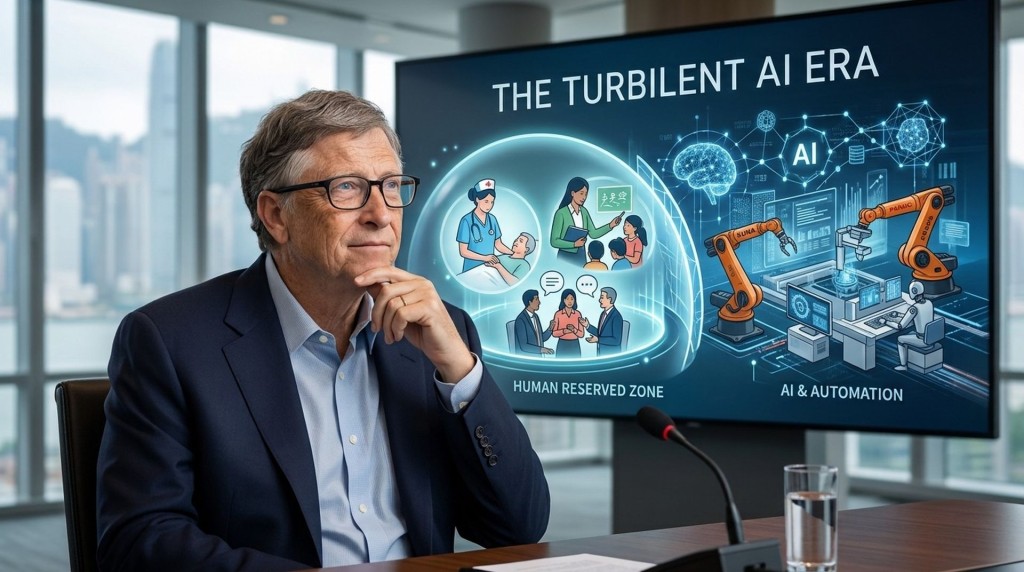
In his landmark essay, Microsoft co-founder Bill Gates presents a visionary framework to safeguard society against rapid automation: establishing "Human Reserved" job zones. Drawing a direct parallel to natural wildlife preserves, places where we deliberately choose not to build because the loss would be too great, Gates argues that society must consciously restrict automation in domains where human presence carries irreplaceable moral and emotional value.
Gates estimates that governments could realistically reserve up to 40 percent of jobs for human workers, particularly in roles that demand empathy, such as childcare, palliative care, and jury service. Reflecting on the compassionate care his late father received during his battle with Alzheimer's, Gates emphasizes that while a robot could technically deliver a terminal diagnosis, doing so strips the interaction of human dignity. In critical fields like healthcare, AI should function as an administrative tool, keeping humans as essential gatekeepers. To level the playing field, Gates advocates taxing AI tokens and robotics, neutralizing tax incentives that currently encourage corporations to replace human payroll with machines.
However, implementing this vision introduces formidable economic and regulatory frictions. Unilaterally restricting automation or taxing compute power risks driving capital and talent to looser markets, creating severe regulatory arbitrage without stopping global labor displacement. Furthermore, defining the boundary between "assistive technology" and "displacing automation" remains notoriously complex, while enforcing human-only mandates invites tokenistic corporate compliance.
These regulatory challenges highlight the need for broader structural solutions, such as Universal Basic Income. While a Robot Tax slows automation to preserve existing jobs, UBI provides an unconditional financial floor when employment inevitably disappears. Used together, taxing AI efficiency could generate the massive revenue needed to fund UBI, transforming rapid technological displacement into shared economic security rather than widespread crisis.
Francis Fong is a Hong Kong IT and Telecom expert who frequently represents the industry in public discussions about innovation, digital transformation, and technology policies