



Read More








Night Recap - November 27, 2026
7 hours ago




Alice Huang skipped classes, wore designer labels during HKBU days
26-11-2026 11:08 HKT


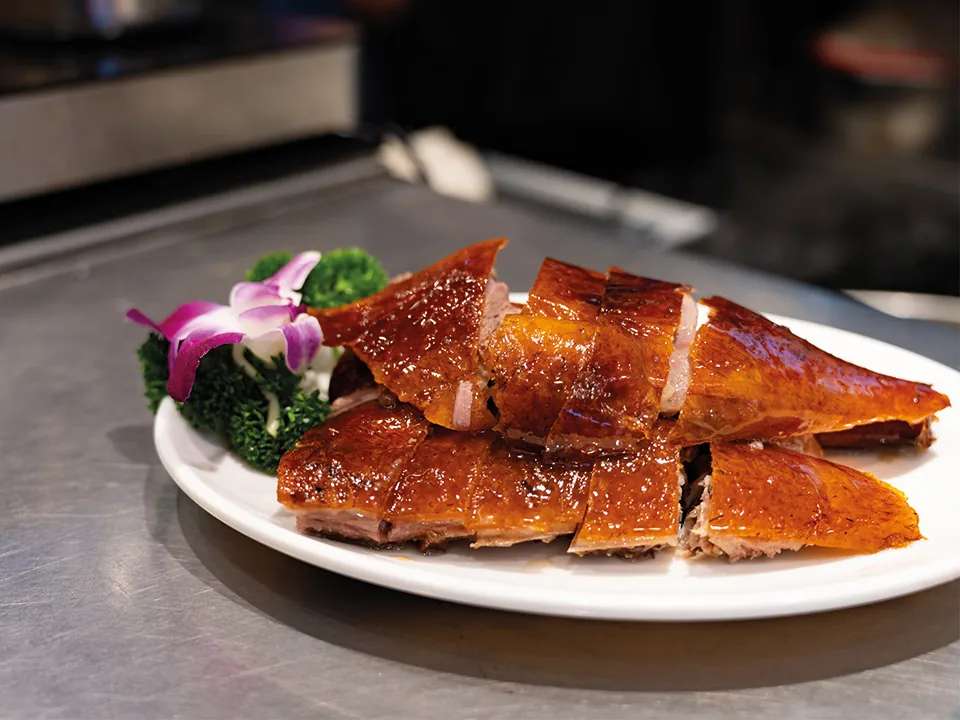
With its glistening, crisp skin, succulent meat and fragrant juices soaking into a bowl of rice, roast goose is one of Hong Kong’s most recognizable culinary pleasures. For diners in Singapore, however, an authentic taste of the Cantonese staple has long been considerably harder to come by.
That could soon change.
Singapore announced on November 23 that it had approved imports of poultry from China’s Hainan province, paving the way for Hainanese goose to reach local kitchens. Hainan is the first Chinese province approved to export frozen and chilled poultry and shell eggs to the city-state.
The announcement, made during the 22nd Joint Council for Bilateral Cooperation between Singapore and China, forms part of Singapore’s wider efforts to diversify its food supply. For the dining scene, however, it opens up a rather different set of possibilities.
Hong Kong-style roast goose has largely disappeared from Singapore’s restaurant menus since the city-state tightened poultry import restrictions following outbreaks of avian influenza in the late 1990s and early 2000s.
In 2004, Singapore suspended imports of raw and chilled poultry from mainland China amid the spread of the H5N1 bird flu virus. Many Cantonese restaurants subsequently turned to roast duck as an alternative.
Even Hong Kong’s Michelin-starred Kam’s Roast Goose had to adapt. When the restaurant opened its first overseas outlet in Singapore in 2016 under the name Kam’s Roast, roast duck took the place of its namesake specialty.
While the two birds share similarities in their preparation, goose offers a distinctive combination of richer flavor, tender flesh and a layer of fat beneath the skin that renders during roasting.
The arrival of Hainanese goose does not necessarily mean Singaporean kitchens will immediately be able to recreate the flavors familiar to Hong Kong diners.
The breed, rearing conditions and fat content of the bird all influence the finished dish, while freshness and preparation are equally important.
At Tin Hung, a longtime roast goose specialist in Yuen Long, black-maned geese sourced from Foshan in Guangdong are marinated, air-dried for several hours and glazed with a mixture of maltose and vinegar before roasting at high temperatures, according to the Michelin Guide.
The process requires careful attention to achieve the characteristic crisp skin while retaining the juices within the meat.
Hardy Kam Shun-yuen, founder of Kam’s Roast Goose, told an interview that the restaurant had previously experimented with European geese in Singapore but found the meat too tough.
He also noted that Hainan’s warmer climate could produce leaner birds than those sourced from Guangzhou. The restaurant plans to assess the quality of Hainanese goose before deciding whether to introduce it to its Singapore menus.
The new import arrangements could nevertheless give chefs room to experiment, whether by revisiting Cantonese roasting traditions or developing dishes that highlight the particular qualities of Hainanese goose.
For Singapore’s diners, it is the prospect of rediscovering a dish that has long been absent from many local menus. For Hong Kong, it is a reminder of how much craftsmanship lies behind something as seemingly simple as a plate of roast goose.